

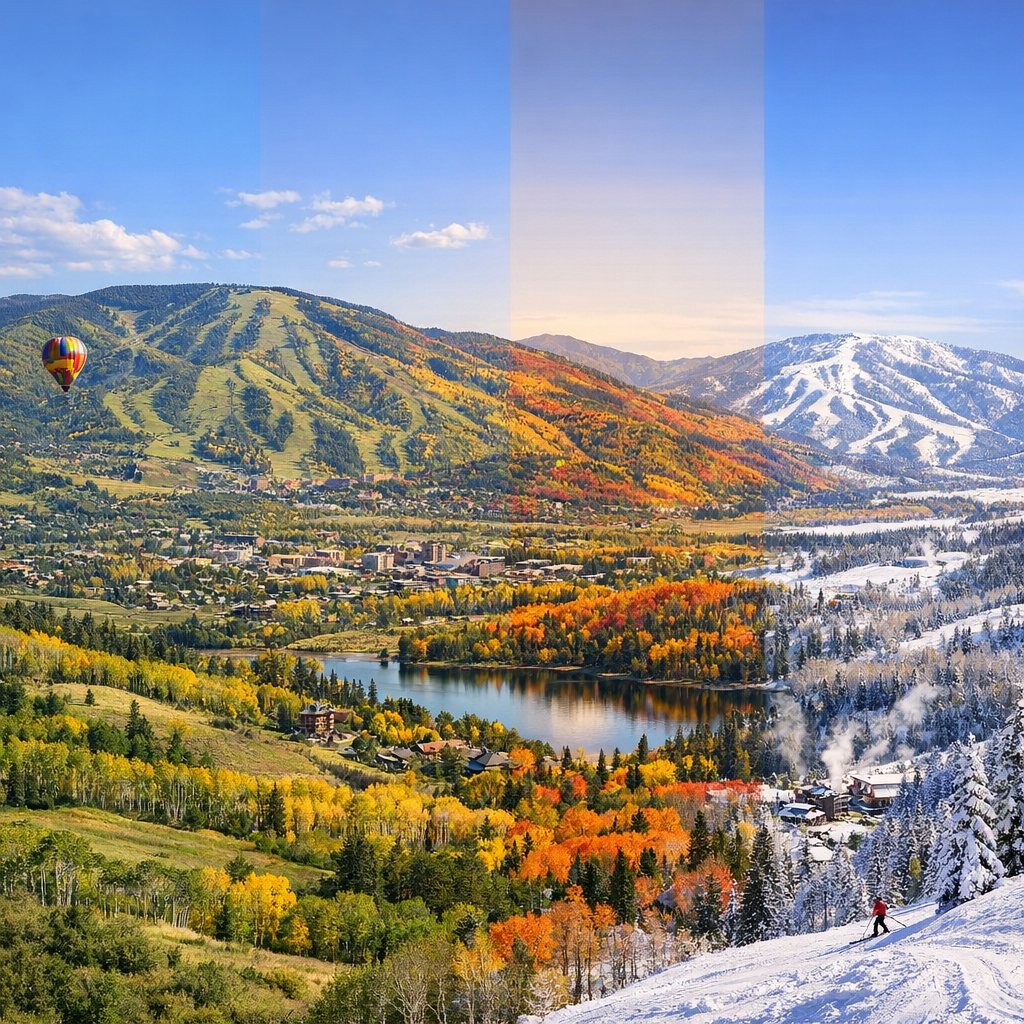
Steamboat Springs, nestled in the heart of Colorado’s Rocky Mountains, boasts a climate that offers both residents and visitors a diverse range of experiences throughout the year. Understanding these patterns is essential for appreciating the region’s natural beauty and addressing its environmental challenges.
Seasonal Climate Overview
Steamboat Springs experiences four distinct seasons, each bringing its own set of weather conditions:
Winter
From November to March, the town transforms into a winter wonderland. Average high temperatures hover around 28°F in January, with lows dipping to 8°F. The area is renowned for its substantial snowfall, averaging 170 inches annually downtown, and even more at higher elevations. This abundant snow supports a thriving winter sports scene, with the Steamboat Ski Area receiving an average of 354 inches of snow each year.
Spring
Spring months, from March to May, bring milder temperatures ranging from 16.9°F to 55.6°F. This transitional period sees increasing daylight hours and a gradual warming trend, making it ideal for early-season hiking and wildlife viewing.
Summer
June through August offers warm, dry conditions with average highs reaching 82°F in July. The low humidity and clear skies provide perfect settings for outdoor activities such as hiking, mountain biking, and fishing. Rainfall during these months is minimal, contributing to the region’s arid summer climate.
Autumn
September to November features cooling temperatures, starting from around 67.3°F in September and dropping to 37.2°F by November. The fall foliage is particularly stunning, drawing visitors who wish to experience the vibrant colors of the changing leaves.
Environmental Initiatives
While Steamboat Springs’ climate offers numerous recreational opportunities, it also presents environmental challenges that the community actively addresses:
Water Quality Concerns
Recent testing has identified the presence of per- and polyfluoroalkyl substances (PFAS), commonly known as “forever chemicals,” in certain local water systems. These substances are persistent in the environment and can pose health risks. Efforts are underway to monitor and mitigate PFAS contamination to ensure safe drinking water for all residents.
Wildfire Mitigation
The Fish Creek Watershed, a critical source of drinking water for Steamboat Springs, is susceptible to wildfires. To protect this vital resource, the city has developed a Wildfire Protection Plan. This plan focuses on preemptive measures, emergency response strategies, and post-fire recovery efforts to maintain water quality and watershed health.
River Flow Management
The Yampa River, central to the community’s recreation and ecology, faces challenges from low flow levels, especially during drought conditions. The Yampa River Environmental Release Program is a collaborative effort aimed at maintaining adequate river flows. By releasing water strategically, the program supports aquatic life, recreational activities, and overall river health.
Understanding Steamboat Springs’ unique climate and the proactive steps taken to address environmental challenges highlights the community’s commitment to preserving its natural resources. Residents and visitors alike are encouraged to stay informed and participate in local initiatives to ensure the sustainability of this beautiful region.